


Buy Coconut Water Straight From Florida!!!!
Contents 11.8 fl oz / 350 mL. Coconut Water – AGUA de COCO – More Potassium = Energy Drinks Vitamin Filled Goya Coconut Water Made from young green vitamin-filled coconuts, Goya’s Coconut Water cools your taste buds with the pure essence of the tropics.
Our Coconut water is 100% natural, so it’s a healthy choice for a light tropical beverage. And with tons of Potassium and vitamins-coconut water in every can, Goya Coconut Water is as great for your health as it is for your thirst.
This refreshing beverage comes with real coconut pieces inside and contains NO Cholesterol!
Plus, coconut water Sugars, Salts, and Vitamins help to ward off fatigue.
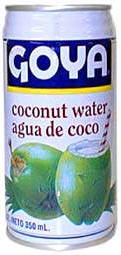 Contents 11.8 fl oz / 350 mL. (SEE BELOW FOR NUTRITION INFORMATION) Status: In Stock & In Season Place of Origin: Palm Beach, Florida Stock Number: #CC41-4310
Coconut Water, Coffee, Tea & Drinks
Get FREE 2-Day Shipping and Other Discounts From Amazon.com SEE MORE COCONUT SHOPPING PRODUCTS
Coconut Water Nutrition Information
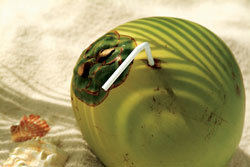 Here is some information about Coconut Water:
“It’s a natural isotonic beverage, with the same level of electrolytic balance as we have in our blood. It’s the fluid of life, so to speak.” In fact, during the Pacific War of 1941-45, both sides in the conflict regularly used coconut water, siphoned directly from the nut, to give emergency plasma transfusions to wounded soldiers.
Most coconut water is still consumed fresh in tropical coastal areas – once exposed to air, the liquid rapidly loses most of its organoleptic and nutritional characteristics, and begins to ferment.
COCONUT WATER FACTS
-
Coconut Water is More Nutritious than whole milk – Less fat and NO cholesterol!
-
Coconut Water is More Healthy than Orange Juice – Much lower calories
-
Coconut Water is Better than processed baby milk- It contains lauric acid, which is present in human mother’s milk
-
Coconut water is naturally sterile — Water permeates through the filtering husk!
-
Coconut water is a universal donor– it’s identical to human blood plasma
-
Coconut Water is a Natural Isotonic Beverage – The same level we have in our blood.
-
Coconut water has saved lives in 3rd world countries through Coconut IV.
-
Sugars, Salts, and Vitamins to ward off fatigue… and is the next wave of energy drinks BUT natural!”, according to Mortin Satin, Chief of the United Nations’ Food & Agriculture Organization.
-
Coconut water contains more potassium (at about 294 mg) than most sports drinks (117 mg) and most energy drinks.
-
Coconut water has less sodium (25mg), whereas sports drinks have around 41mg, and energy drinks have about 200 mg!
-
Coconut water has 5mg of Natural Sugars, whereas sports and energy drinks range from 10-25mg of Altered Sugars.
-
Coconut water is very high in Chloride at 118mg, compared to sports drinks at about 39mg.
-
Data is based on a 100ml drink.
Fresh Coconut Nutrition Facts
- Nutrition Facts Serving Size 1 cup (240 g)
- Amount Per Serving
- Calories 45 Calories from Fat 5 %
- Daily Value*
- Total Fat 0g 0%
- Saturated Fat 0g 2%
- Cholesterol 0mg 0%
- Sodium 250mg 10%
- Total Carbohydrates 10g 3%
- Dietary Fiber 3g 10%
- Protein 2g 4%
- Vitamin A 0%
- Vitamin C 10%
- Calcium 6%
- Iron 4%
- Zinc 2%
- Thiamin 6%
- Riboflavin 8%
- Niacin 0%
- Vitamin B-6 4%
- Folate 2%
- Vitamin B-12 0%
- Phosphorus 6%
- Magnesium 15%
- Vitamin D 0%
- * Percent Daily values are based on a 2,000-calorie diet. Your daily values may be higher or lower depending on your calorie needs
A LITTLE MORE COCONUT HISTORY ON THE COCONUT AND ITS ORIGINS:
The English name coconut, first mentioned in English print in 1555, comes from the Spanish and Portuguese word coco, which means “monkey face.” Spanish and Portuguese explorers found a resemblance to a monkey’s face in the three-round indented markings or “eyes” found at the base of the coconut. On the Nicobar Islands of the Indian Ocean, whole coconuts were used as currency for the purchase of goods until the early part of the twentieth century.
Coconuts are the fruit of the coconut palm, botanically known as Cocos Nucifera, with Nucifera meaning “nut-bearing.” The fruit-bearing palms are native to Malaysia, Polynesia, and southern Asia, and are now also prolific in South America, India, the Pacific Islands, Hawaii, and Florida.
The light, fibrous husk allowed it to easily drift on the oceans to other areas to propagate. In Sanskrit, the coconut palm is known as kalpa vriksha, meaning “tree which gives all that is necessary for living,” since nearly all parts of the tree can be used in some manner or another.
The coconut itself has many food uses, including milk, meat, sugar and oil, as well as functioning as its own dish and cup. The husk was also burned for fuel by natives, but today a seed fiber called coir is taken from the husk and used to make brushes, mats, fishnets, and rope.
A very potent fermented toddy or drink is also made from the coconut palm’s sap. Coconut oil, a saturated fat made from dried coconut meat, is used for commercial frying and in candies and margarine, as well as in non-edible products such as soaps and cosmetics.
Although it takes up to a year for coconuts to mature, the trees bloom up to thirteen times a year, so fruit is constantly forming, yielding a continuous harvest year-round. An average harvest from one tree runs about 60 coconuts, with some trees yielding three times that amount.
The coconut’s name is a bit of a misnomer, since it is botanically classified as a drupe and not a nut. It is the largest seed known.
FACTOID: THE COCONUT IS NOT A “NUT”, IT IS A “SEED”.
If you’ve ever opened a fresh coconut, you will have seen the thin, opaque, almost clear coconut juice or water, which has a slight almond flavor. Contrary to popular belief, this is not coconut milk. However, the water is consumed as a drink fresh from the coconut by many, and it can also be used in recipes.